|
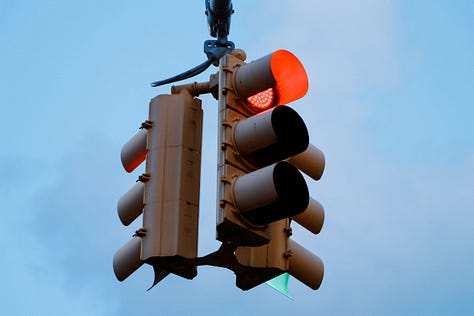
| 'member these guys? |
I don’t know about you, but I’m not feeling very powerful right now. Living in this country today is like helplessly watching your beloved car being driven by lunatics into a ditch, then fished out, stripped and sold for parts—and knowing that we, the people (a lot of people anyway) GAVE THEM THE CAR KEYS.
When I’m feeling like this, I turn to The Good Book for consolation. The thesaurus, I mean. Flipping to “power,” I want to know it all—synonyms, antonyms. Example: power is strength, it is not weakness. Although an argument can be made for weakness as a gateway to spiritual power. As Saint Paul writes in the “other” Good Book: Therefore I will boast all the more gladly about my weaknesses, so that Christ’s power may rest on me. – 2 Corinthians 12:9. In general, though, being weak is not a "power play" in this world.
Moving right along.
There are many kinds of power: Battery Power. Turbo Power. Power Point. Power of Suggestion. Power of Attorney. Power Lifting. Turtle Power. All of these imply some kind of agency—something or someone can do this or that because it (they, we) have (has) the capability. The power, one might say.
I recently read the title of a motivational article about three kinds of power: Willpower, Waypower and Waitpower. I didn’t bother reading the actual article, but I did want to mention the clever title. I can guess the content, though—to effect a desired result, you need Discipline, Direction and…you need to Wait (something like that, but starting with D).
Hold on a minute (wait!) No wonder I don’t feel powerful—I hate to wait! I lack waitpower!
Yet, like it or lump it, waiting is the condition we’re all in. We can’t move the clock hands forward—well, technically we could, but I’m being theoretical. Also no one has clocks with hands anymore. What I mean is, time takes its…time. November 3rd will be here when it gets here, right?
So OK, where’s the power? For that, let’s turn to the ancient philosopher Frederick (the Wise) Rogers, who sang, “Let’s think of something to do while we’re waiting, while we’re waiting for something to do.” Plant a seed, and wait—but also, water, weed, give it sun. Nurture. Active waiting, not the sitting-around- doing-nothing kind. I can spend the next two weeks paralyzed with anxiety and dread OR I can keep trying to make a difference. The two weeks will pass either way, but only one way is powerful.
Which is why today, Saturday, October 17th, I will be at a Vote Early event with some friends. I've even made a sign that reads: YOUR VOTE IS YOUR VOICE. We’ll help people register to vote (October 19th is PA deadline), and tell them where ballot boxes and polling places are located.
What will you do with the next 336* hours? I urge you, dear readers, to use your waitpower wisely.
More power to us!
*Assuming you’re reading this on Tuesday, October 20th
 |
| Yes, we MUST |